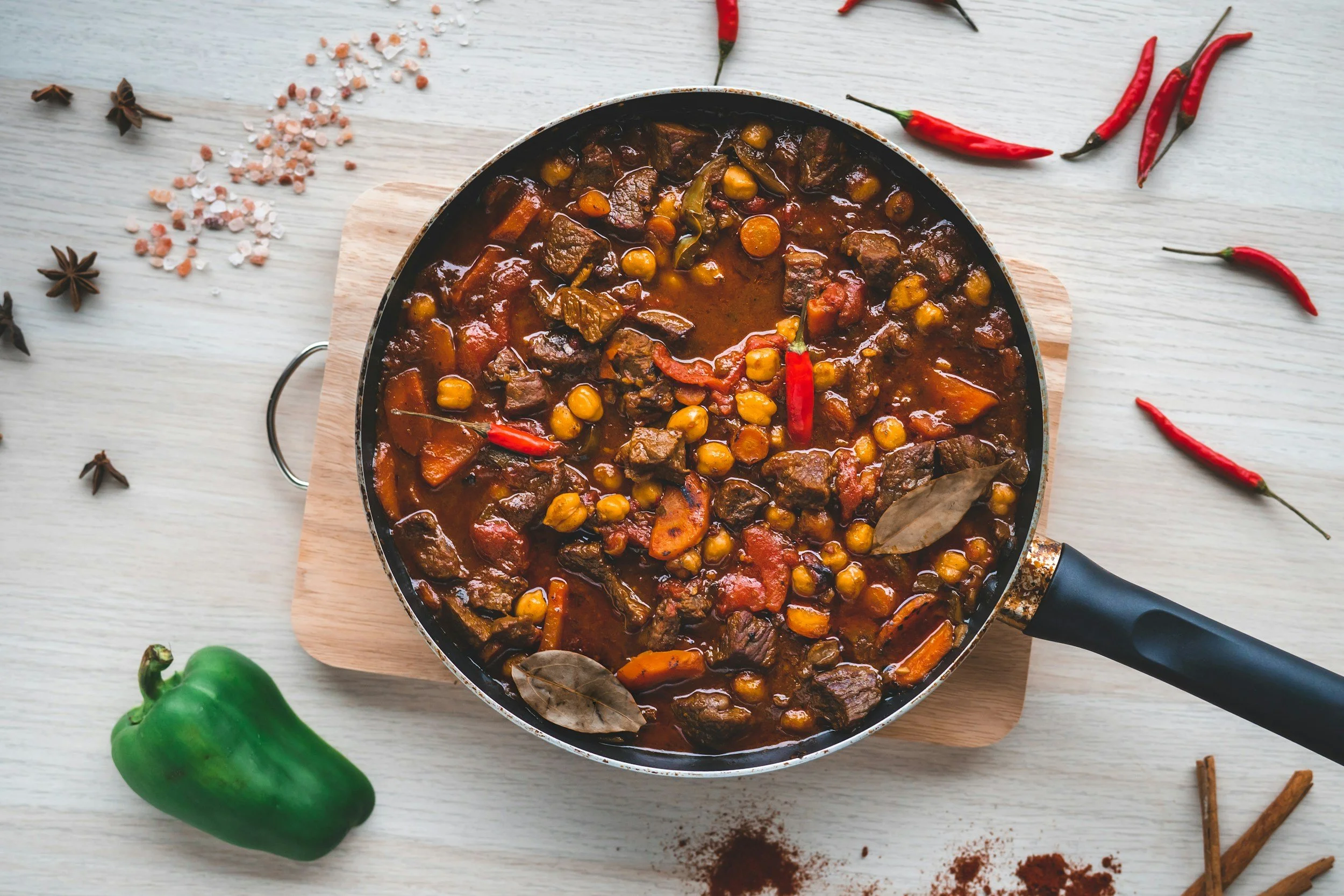
Food and Cooking
Cooking is one of the most important adulting skills because it affects your health, budget, schedule, and confidence. You do not need to become a chef. You just need to learn a few safe, flexible methods that help you feed yourself and others without panic.
Start here if you are nervous about cooking: Basic Cooking Methods
Start here if you are afraid of undercooking meat: Safe Meat Temperatures
Start here if you are broke and hungry: Easy Pantry Staples
Start here if breakfast confuses you: Egg-Cellent Eggs
Start here if dinner is tonight and you have no plan: Last-Minute Dinner Pantry Staples
1. Start Here: Cooking Safely
Safe meat temperatures, food thermometer, common beginner mistakes.
2. Learn the Basic Methods
Pan-cooking, sautéing, baking/roasting, boiling/simmering, slow cooking.
3. Beginner Cooking Guides
Basic Cooking Methods, Egg-Cellent Eggs, Beginner’s Guide to Pan Cooking/Baking/Roasting, Spray and Sauté.
4. Feed Yourself Without Going Broke
Pantry staples, budget foods, beans, rice, eggs, pasta, frozen vegetables, simple meals.
5. When Something Goes Wrong
Burned food, undercooked meat, too salty, too watery, smoke alarm, food stuck to pan, forgot to thaw meat.
1. Start Here: Cooking Safely
Before beginning cooking, there are a few things to familiarize yourself with.
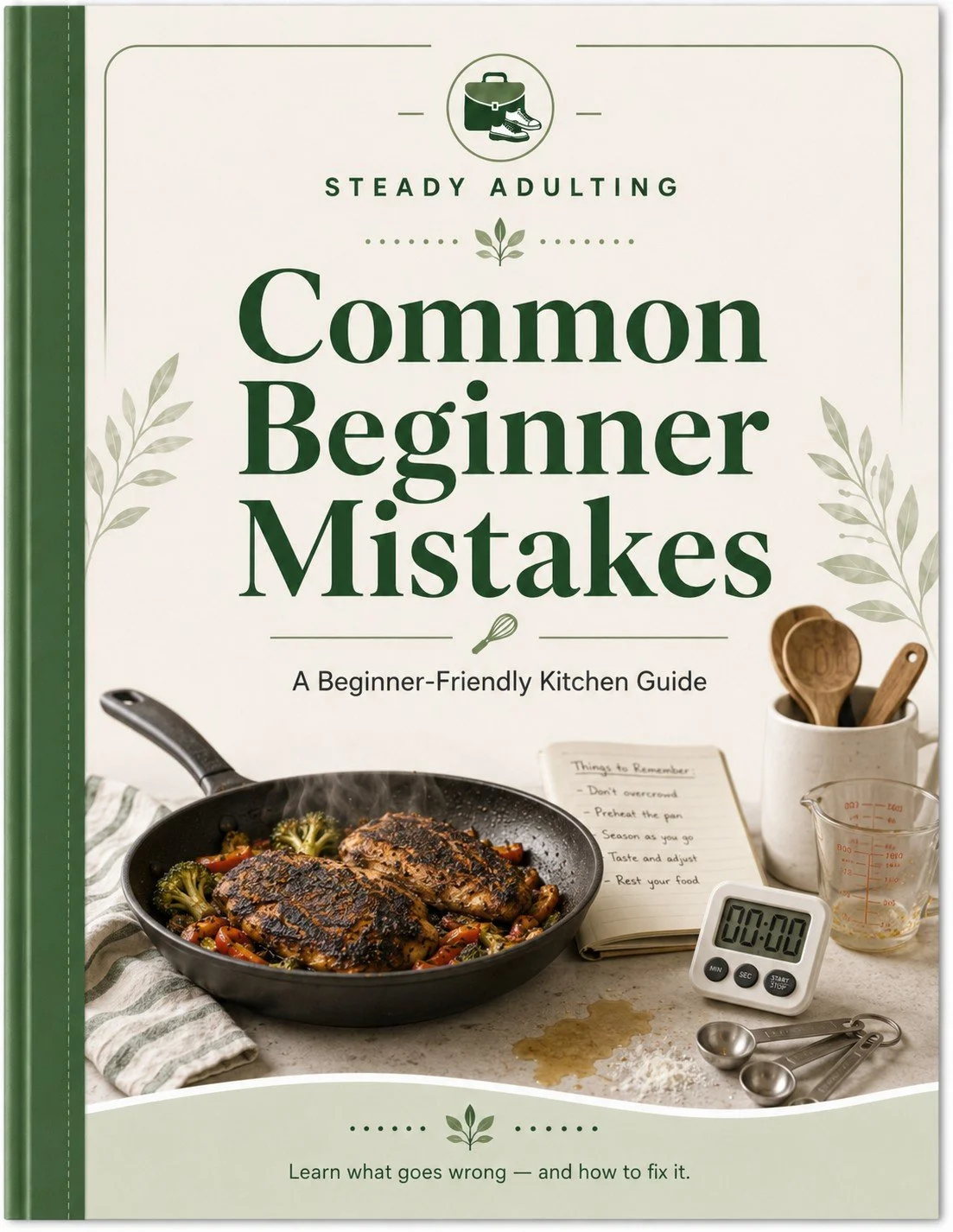
It is not just you! The top 4 errors in the kitchen when cooking meats.
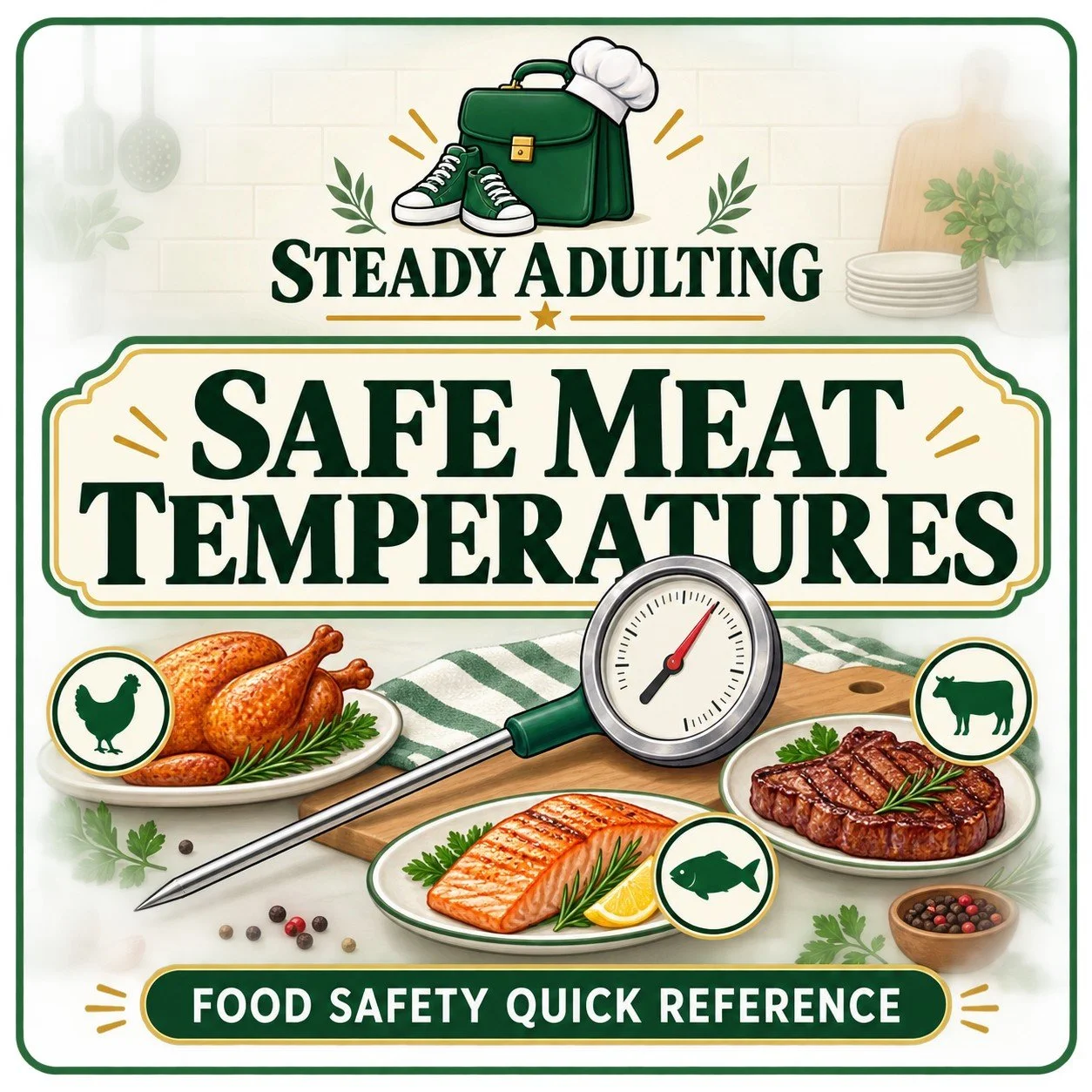
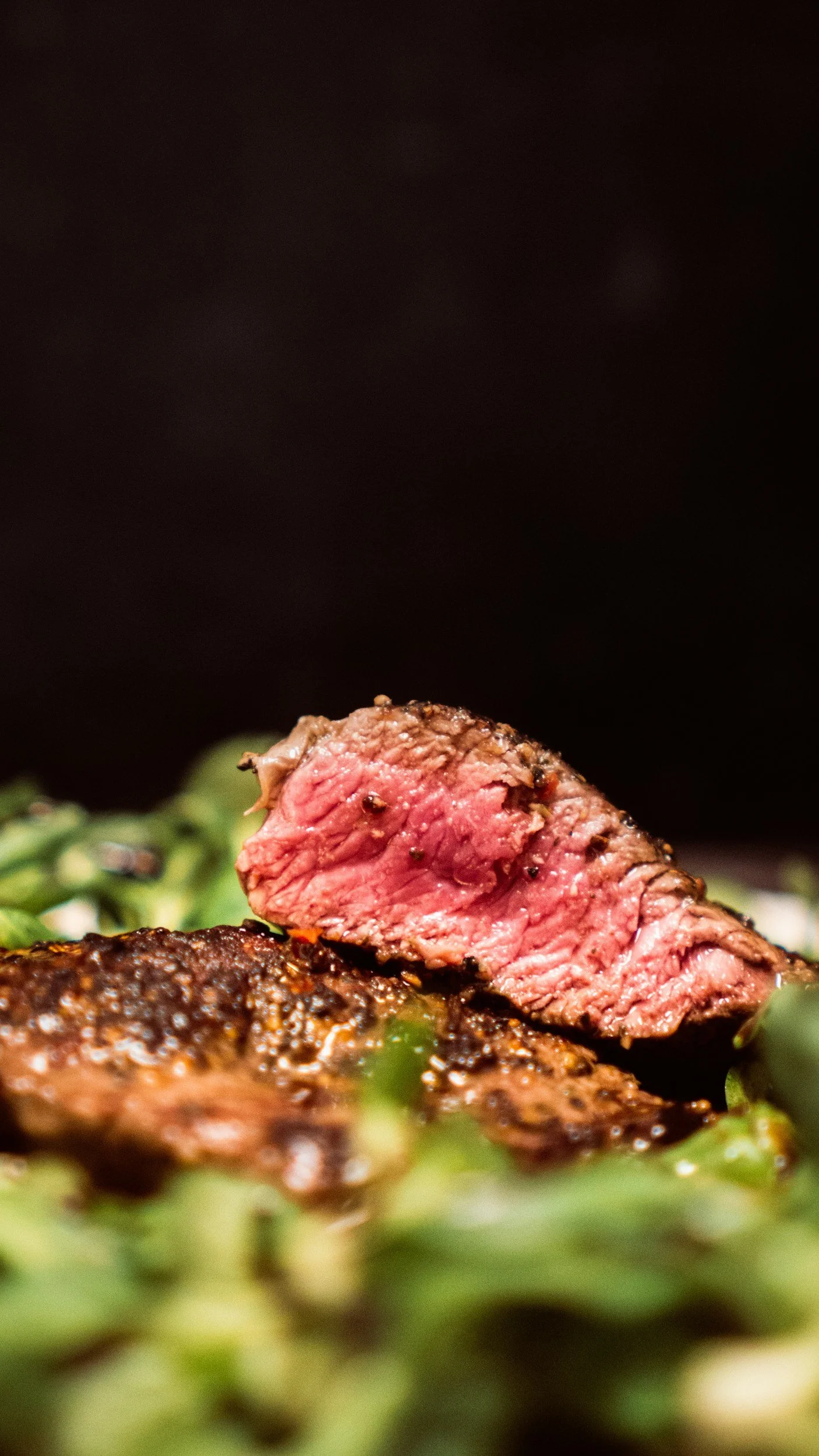
When is your food actually “cooked”? This guide gives you the internal temperature for meats to be safe to eat. Remember to take the temperature at the thickest part of the meat, and ground meat needs a slightly higher temperature.
How to Use a Food Thermometer
Insert the thermometer into the thickest part of the food.
Avoid touching bone, fat, or the pan.
For thin foods, insert from the side if possible.
Wait for the reading to stop changing.
Wash the thermometer after using it on raw or undercooked food.
Check multiple spots in large or uneven pieces.
To be sure your meat is done
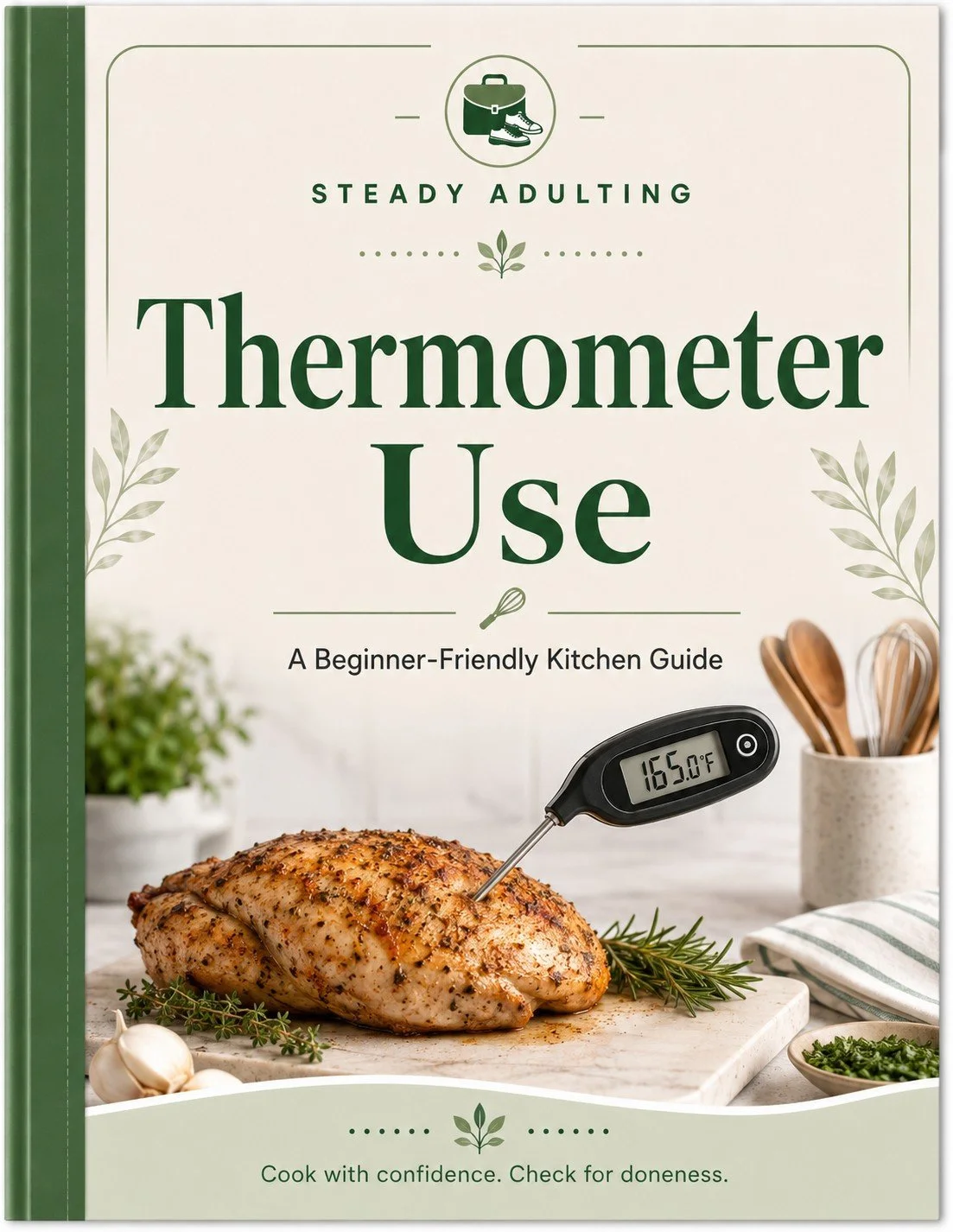
Though the word “thermometer” might make it seem easy enough to use, there are specific rules to remember when using it to take the temperature of meat.
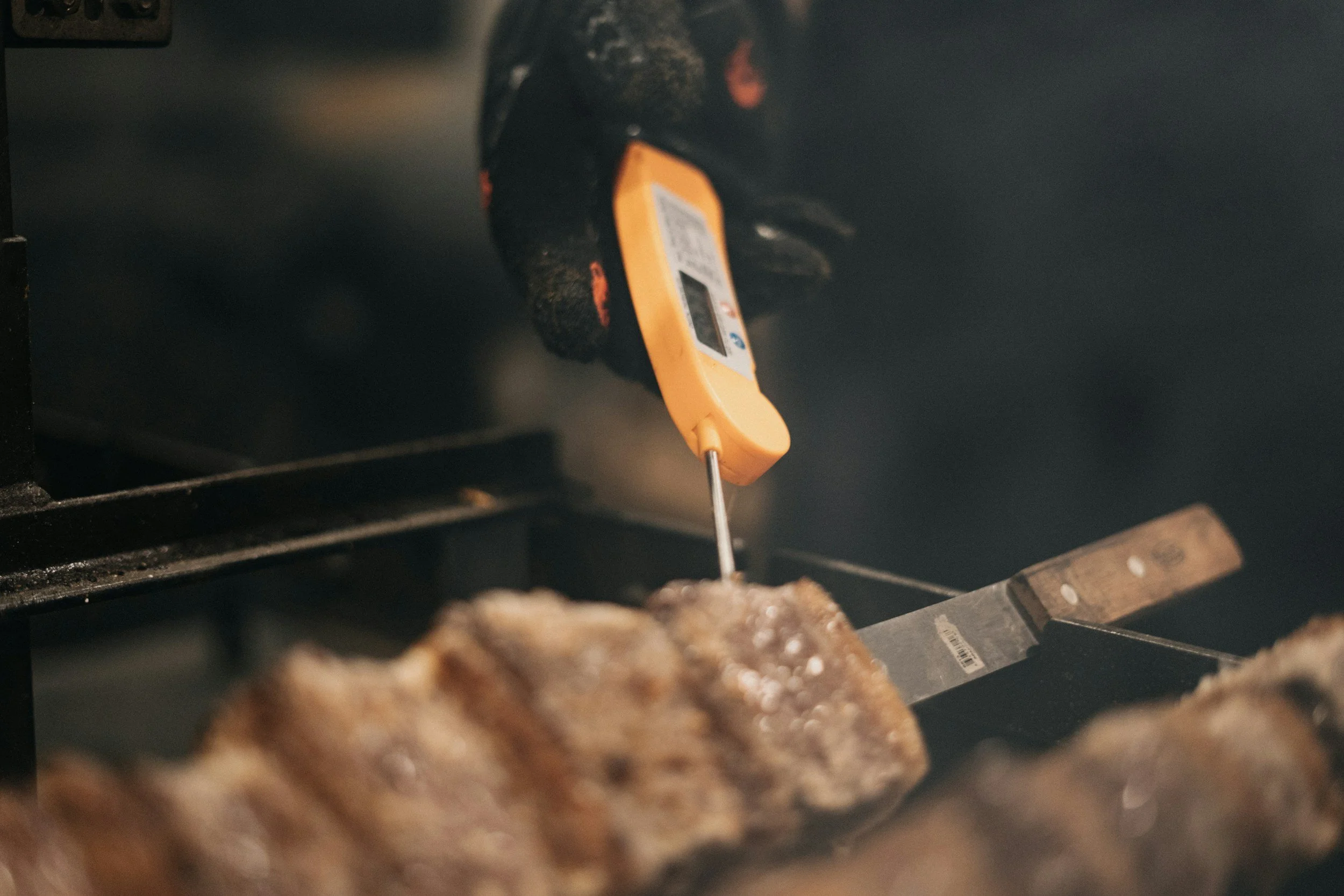
Image by: @josholalde
2. Learn the Basic Methods
Gain an important understanding of the common methods of preparing foods.
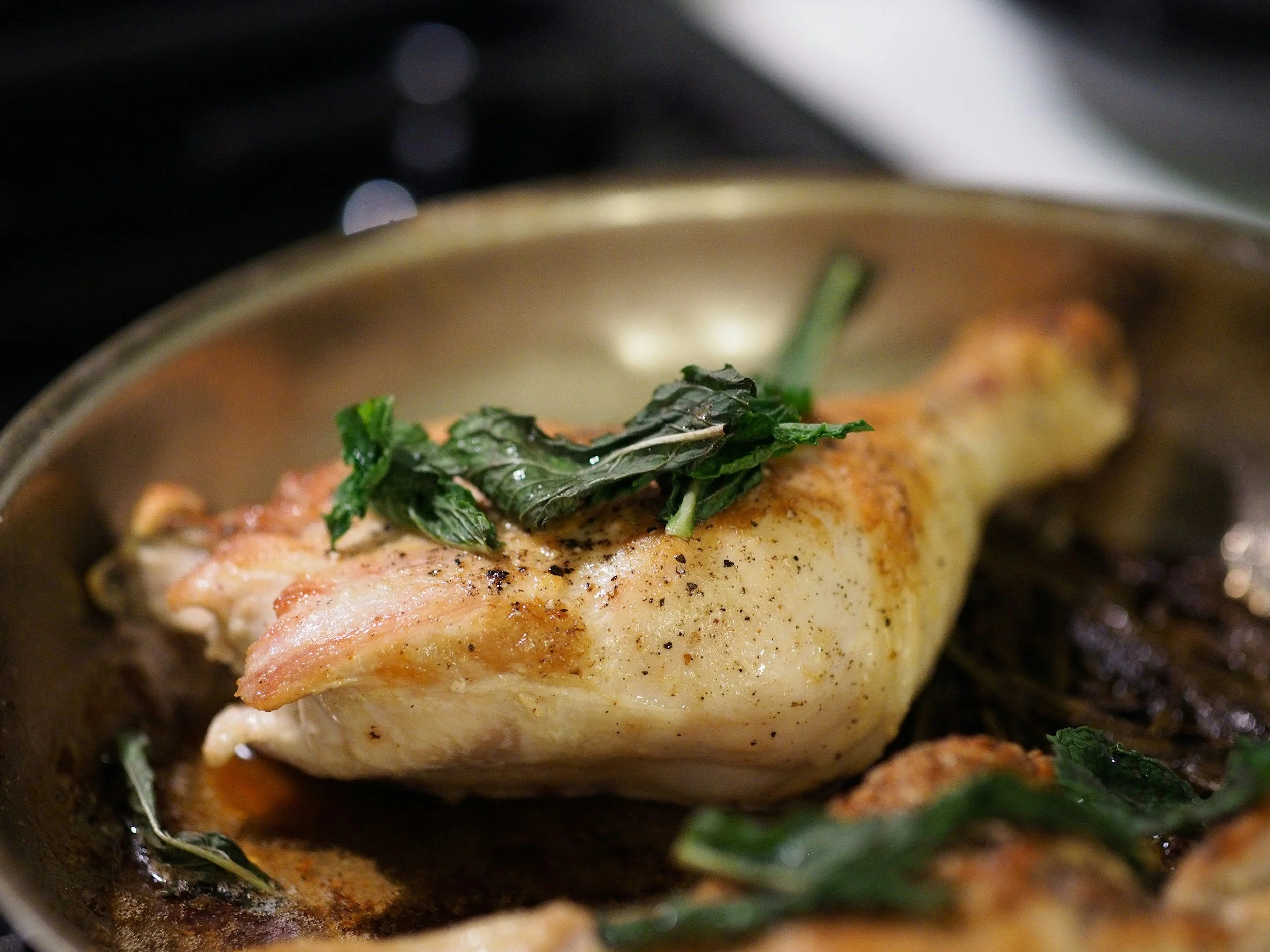
Pan-cooking
Good for: chicken breast, ground beef, pork chops, eggs, vegetables.
Pan-cooking is useful because it is fast and flexible. Heat the pan first, add oil or butter if needed, then add the food. For thicker meats, brown the outside first, then lower the heat and cover the pan so the inside can finish cooking without burning the outside.
Best beginner foods:
Ground beef or turkey
Chicken breast or thin chicken cutlets
Eggs
Frozen vegetables
Sausage slices
Pork chops
Sautéing
Good for: onions, peppers, mushrooms, frozen vegetables, quick side dishes.
Sautéing means cooking food in a pan with a little fat over medium or medium-high heat. Stir regularly so the food cooks evenly.
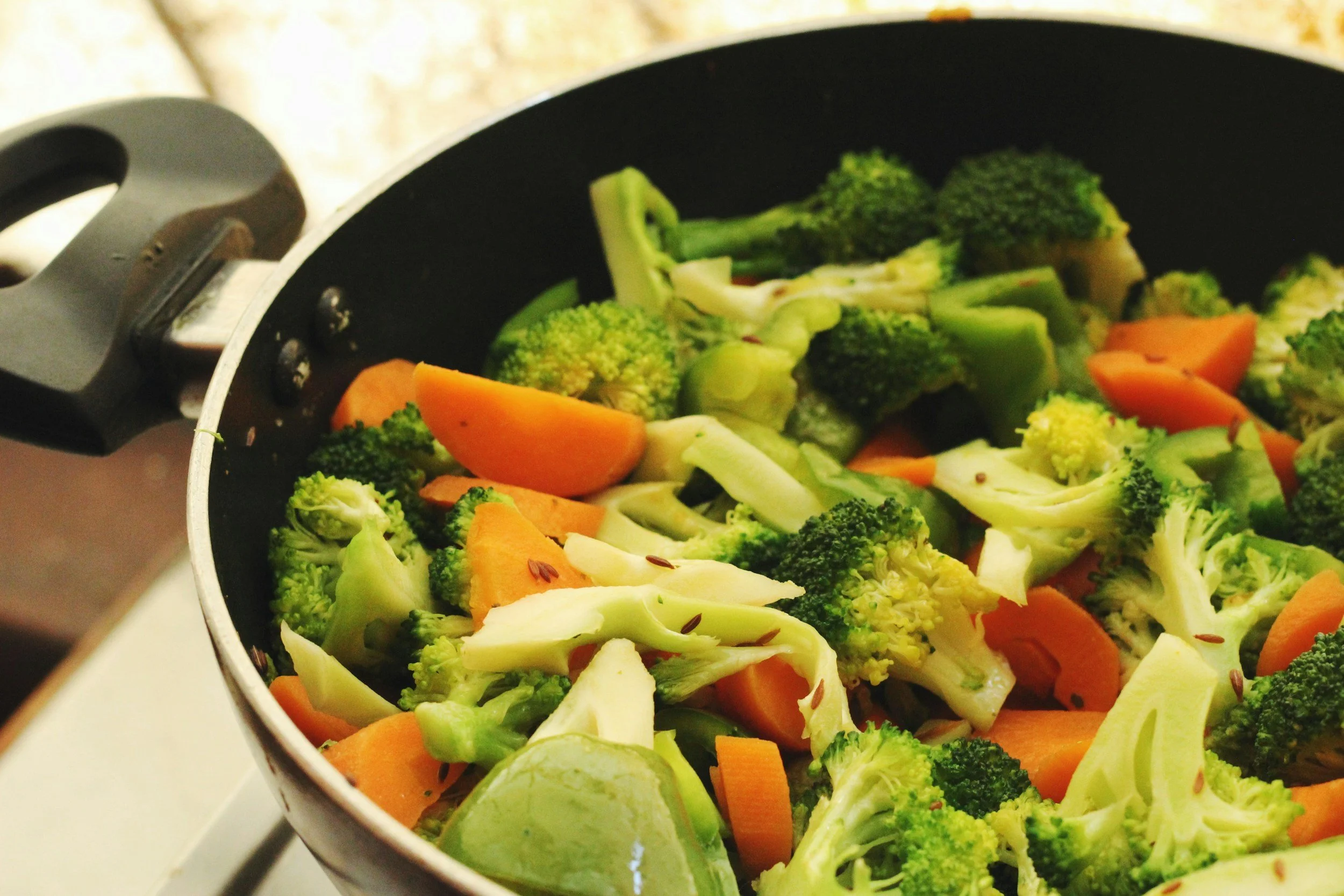
Basic Cooking Methods
Baking or Roasting
Good for: chicken thighs, chicken breast, meatloaf, pork loin, fish, vegetables.
Baking is helpful because the oven does most of the work. It is good for people who are nervous about cooking because you can season the food, place it on a pan, set the oven, and check the temperature near the end.
Beginner tip: thinner pieces cook faster; thicker pieces take longer.
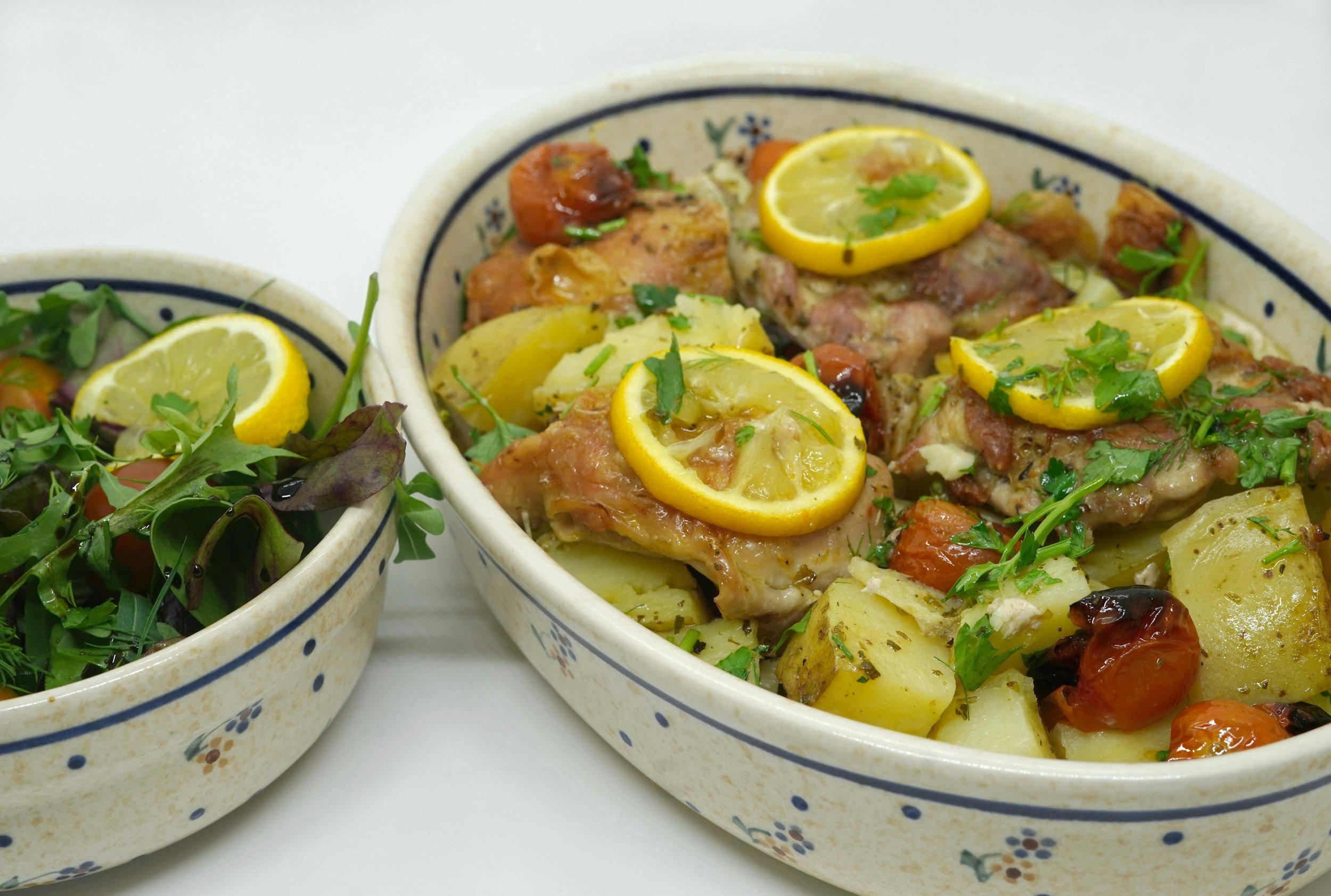
Printable Charts: Meat and Poultry Roasting Charts | FoodSafety.gov
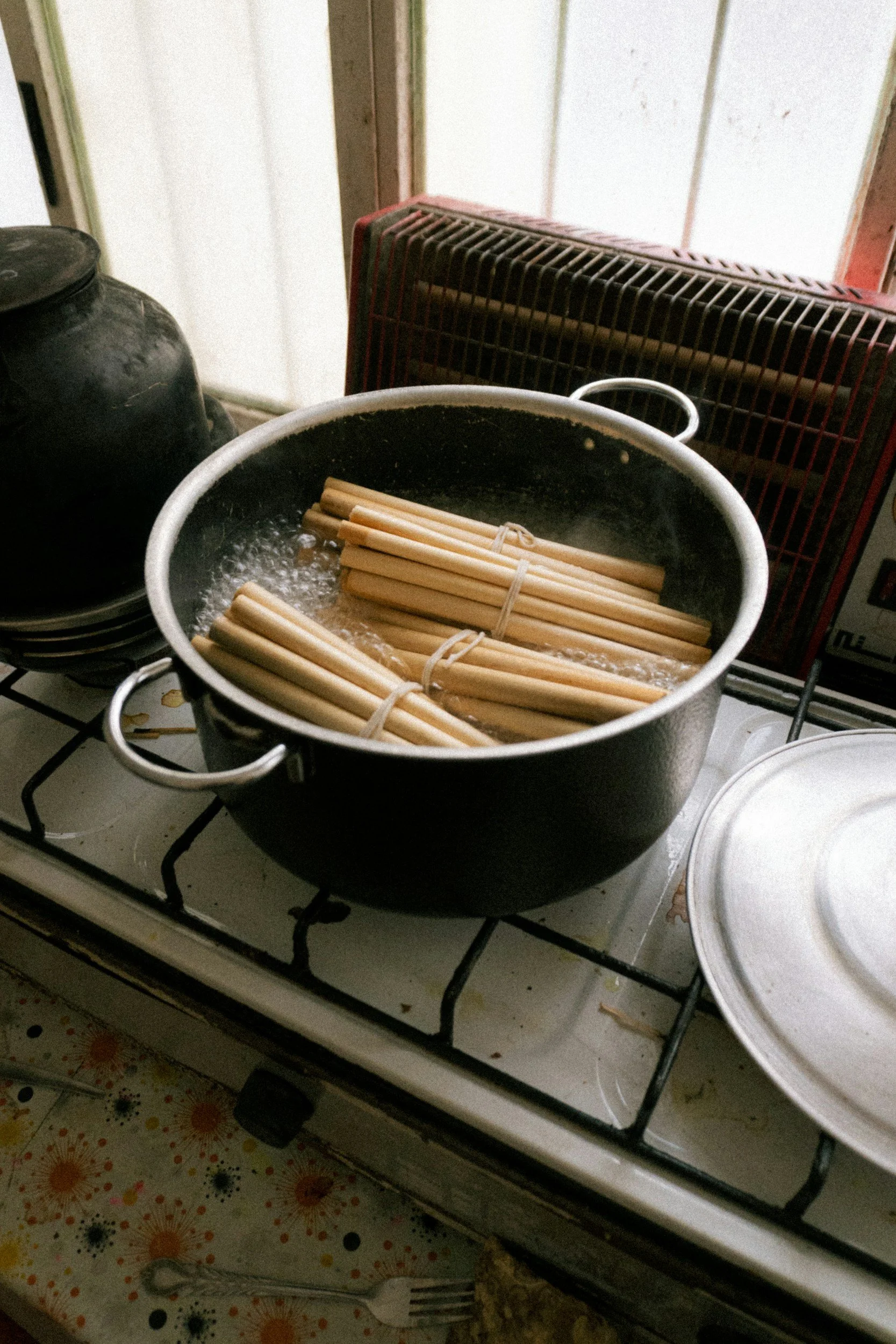
Boiling or Simmering
Good for: pasta, rice, eggs, soup, beans, potatoes.
Boiling means big bubbles. Simmering means smaller, gentler bubbles. Many foods start with boiling and then move to simmering.
Examples:
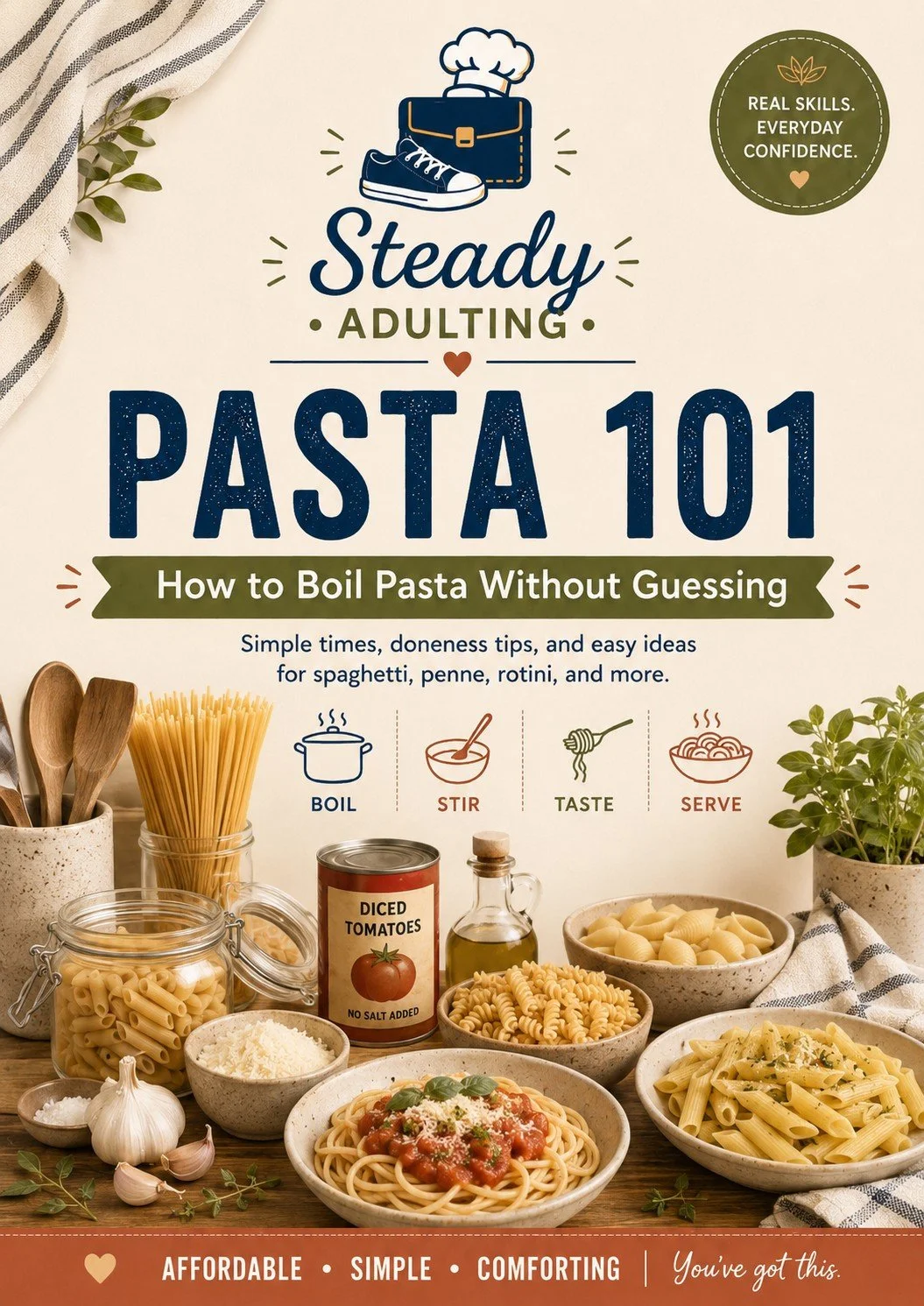
Pasta boils uncovered.
Soup often simmers so flavors can blend.
Dried beans simmer until tender.
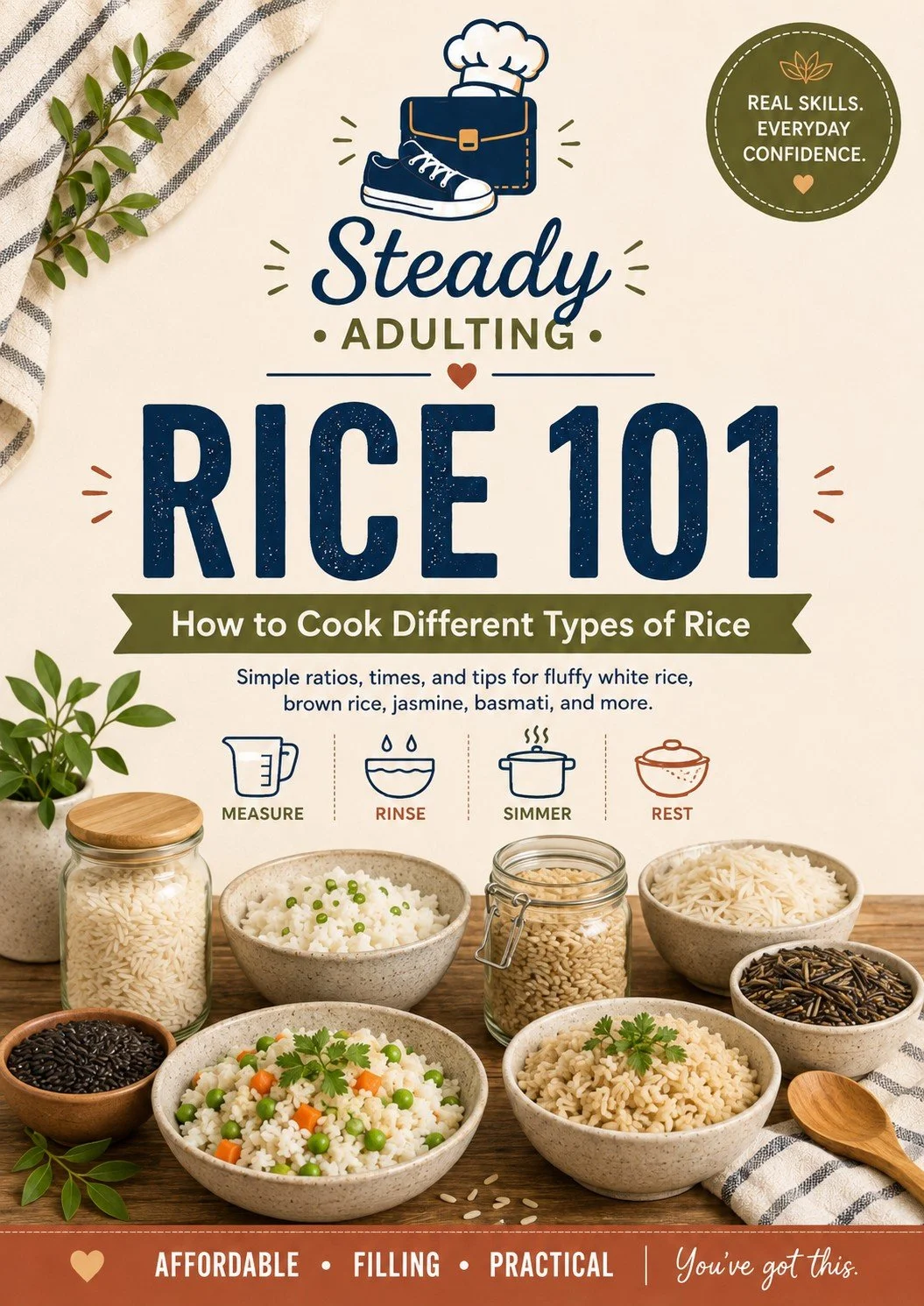
Rice usually comes to a boil, then gets covered and cooked on low.
Slow Cooking
Good for: soups, stews, shredded chicken, beans, chili.
A slow cooker is helpful for busy adults, but it still needs food safety awareness. Do not leave raw meat sitting out. Keep cold food cold until cooking begins, and make sure the final dish reaches a safe temperature.
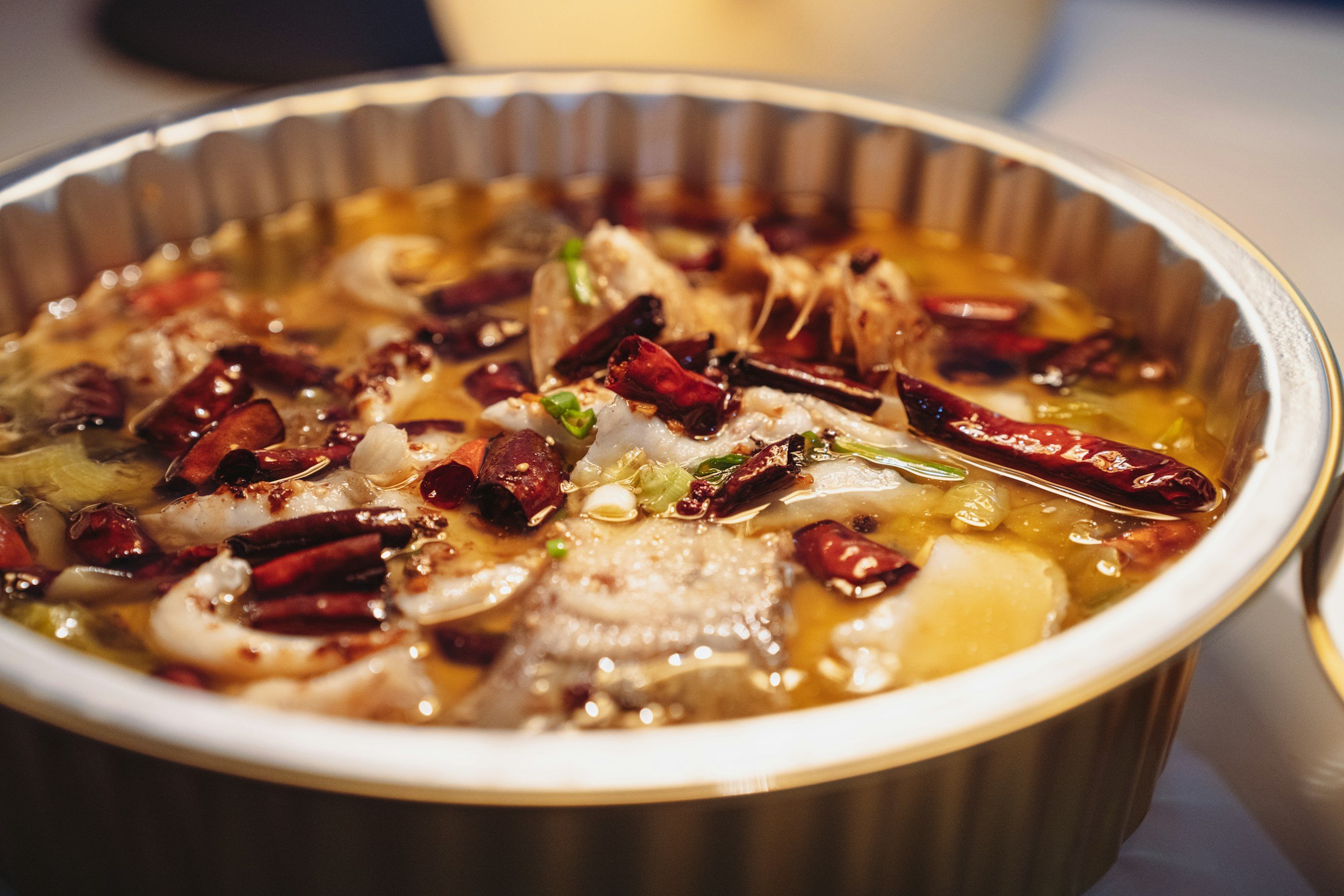
Image by @samharrons
Guide: Safe Meat Temperatures & Cooking Methods
The Adulting Rule
When cooking meat, poultry, eggs, or leftovers, remember this:
Time is an estimate. Temperature is proof.
A recipe might say “cook for 20 minutes,” but ovens, pans, meat thickness, starting temperature, and stove strength all vary. The only reliable way to know whether food is safely cooked is to check the internal temperature with a food thermometer.
SOURCE: Cook to a Safe Minimum Internal Temperature | FoodSafety.gov
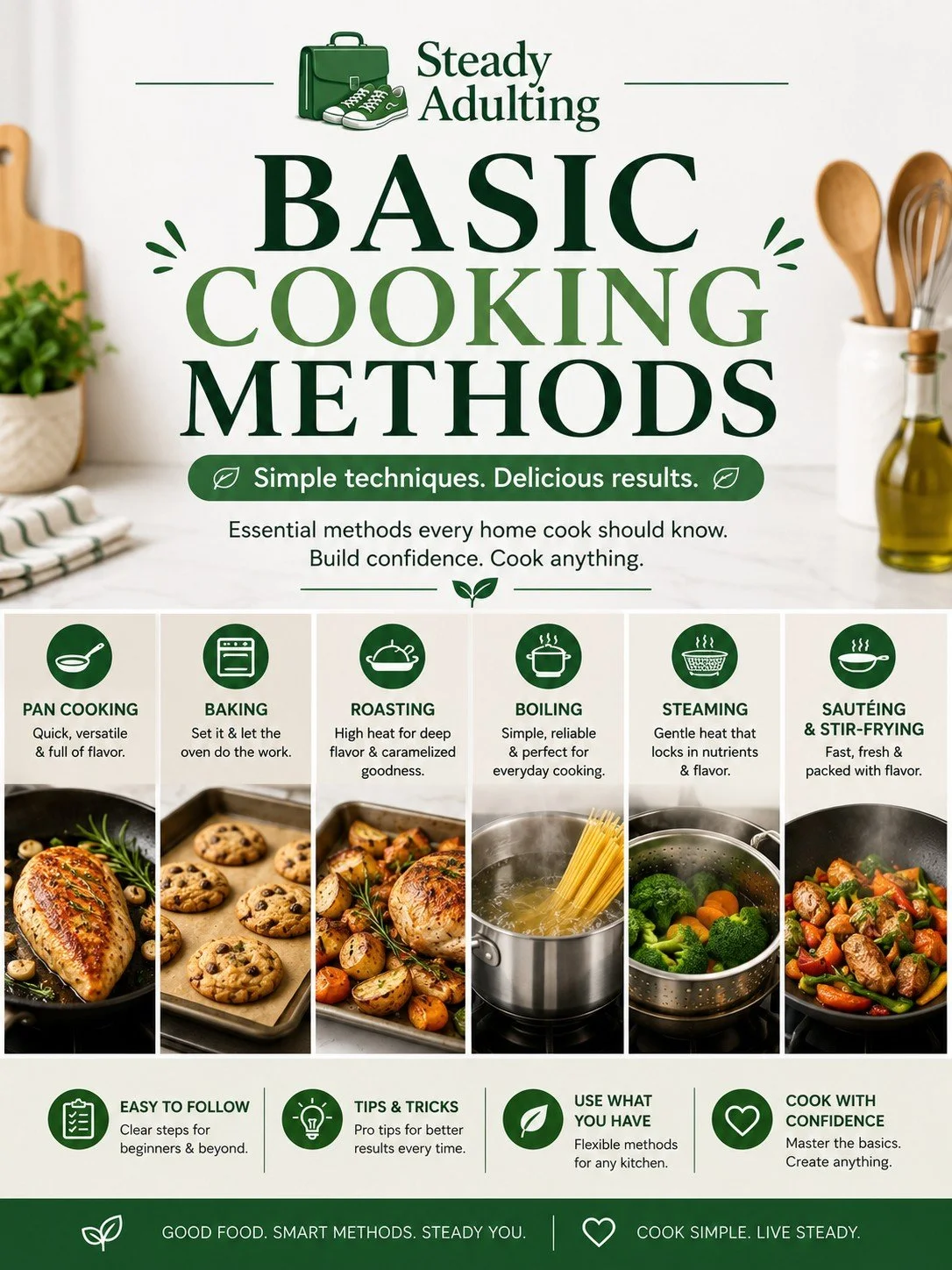
A few basic principles to know before you attempt cooking new recipes.
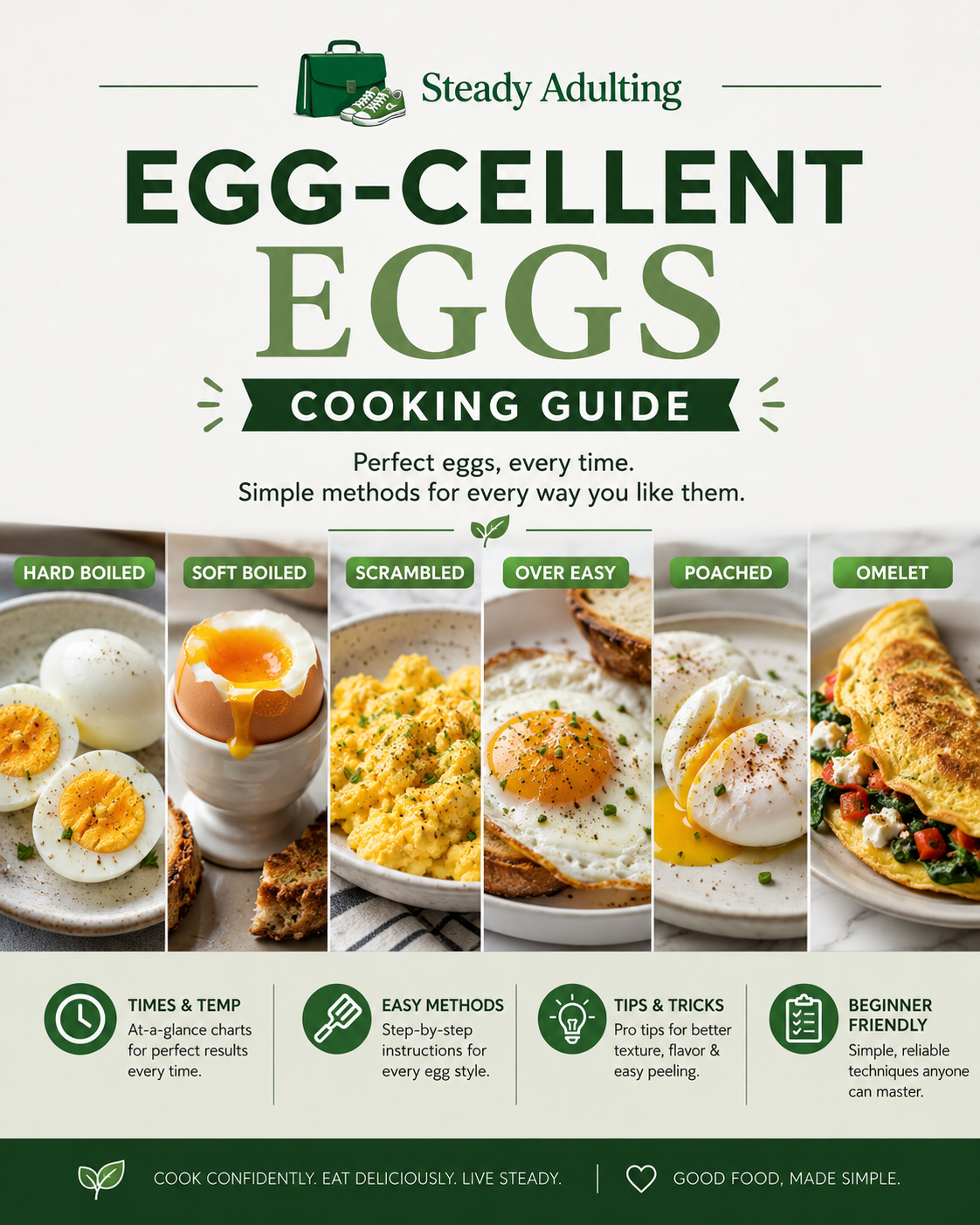
A guide to cooking different styles of eggs, from sunny side up, to hardboiled, to omelets, to poached, to baked, and everything in between.
3. Beginner Cooking Guides
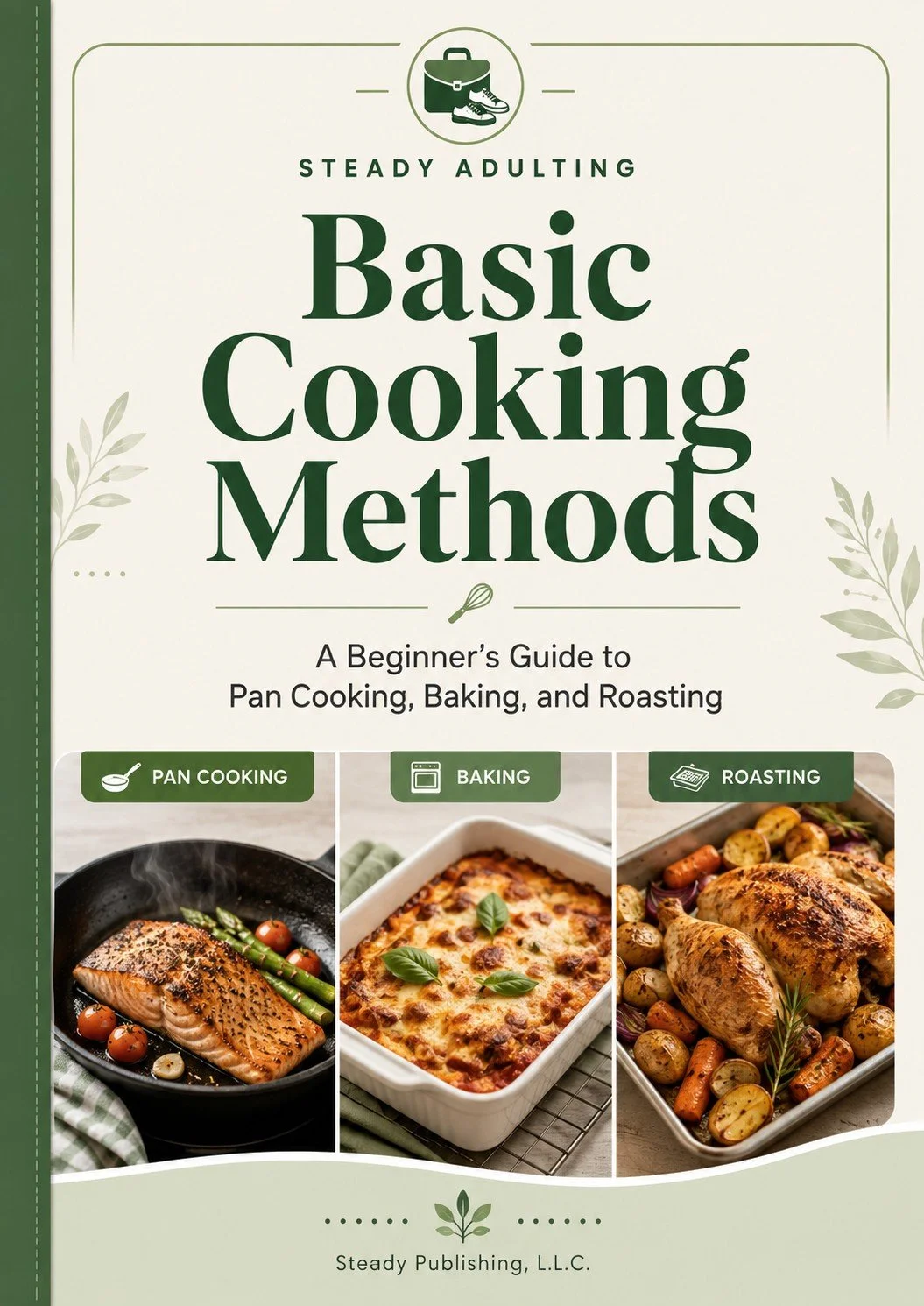
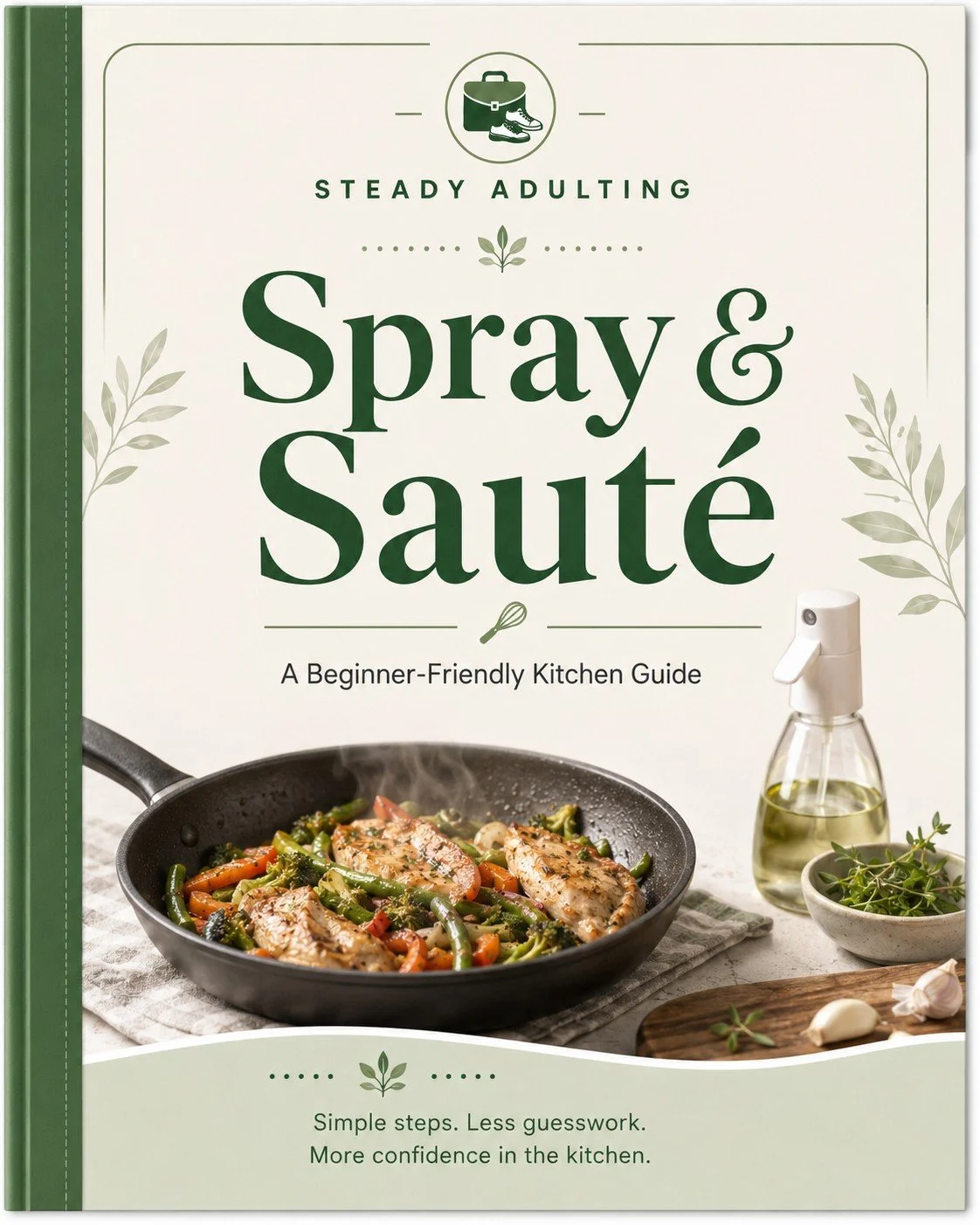
A guide for beginners who need more specific instructions than “bake chicken.”
4. Feed Yourself Without Going Broke
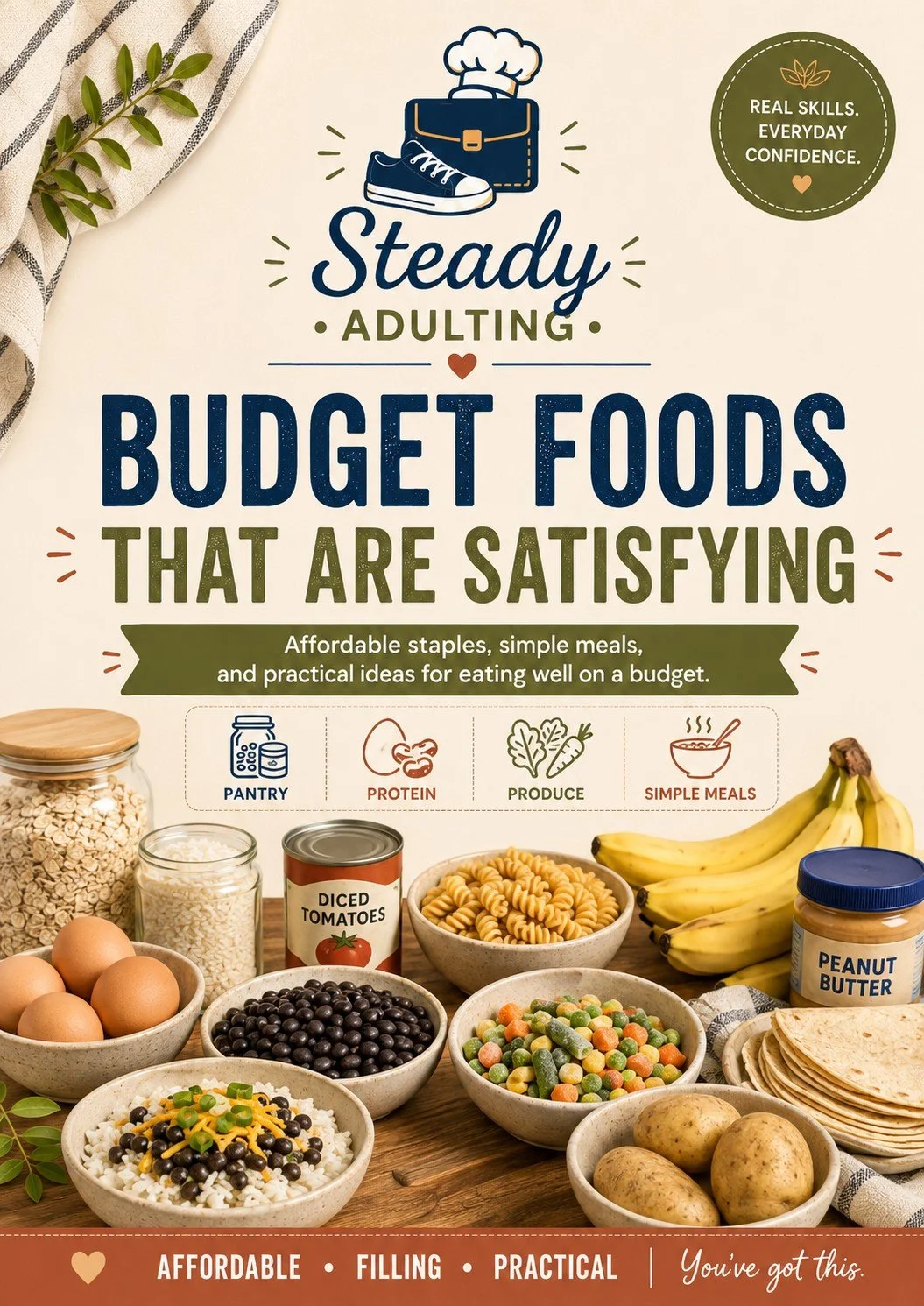
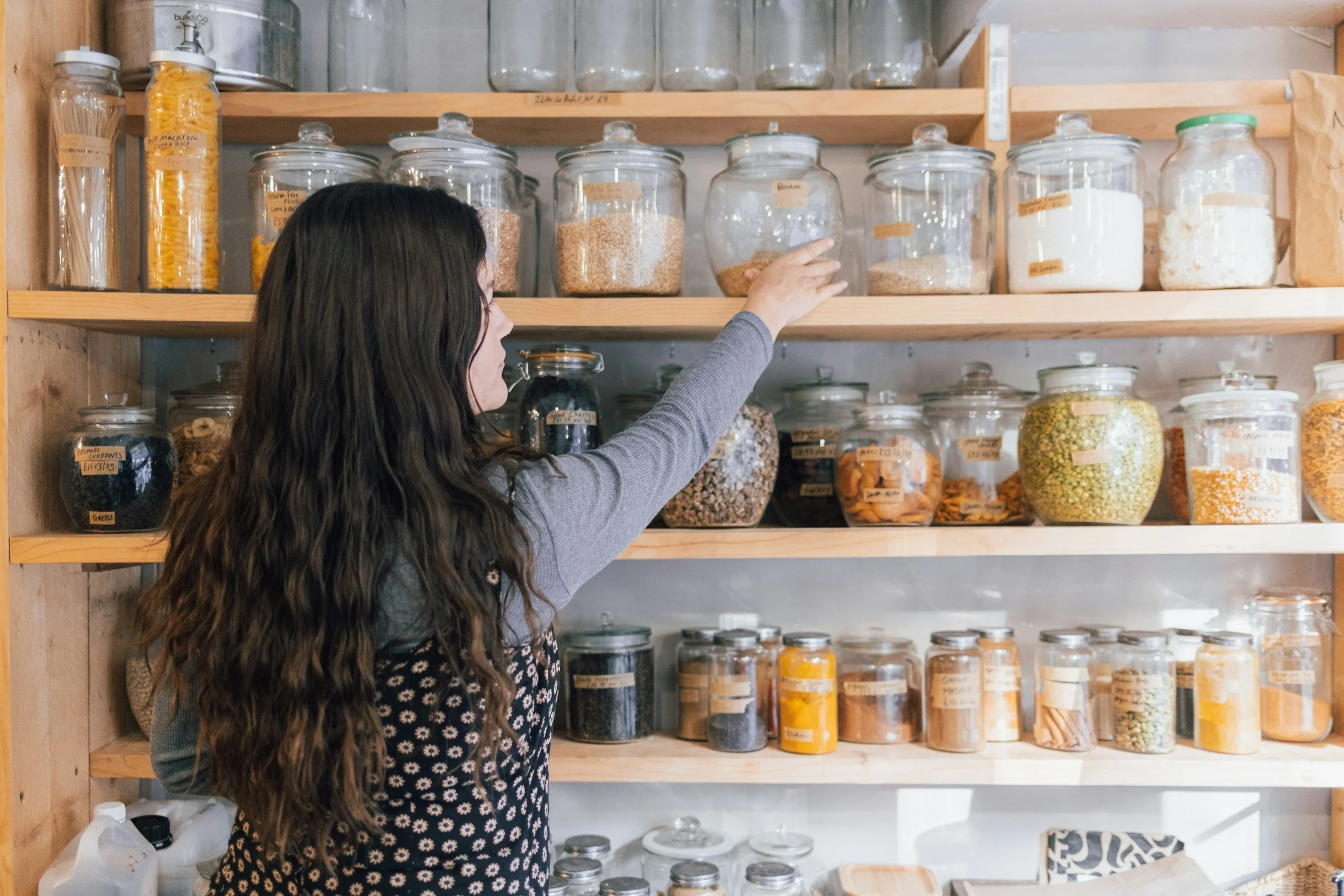
Foods that you can keep at home to satisfy your hunger without draining your wallet.
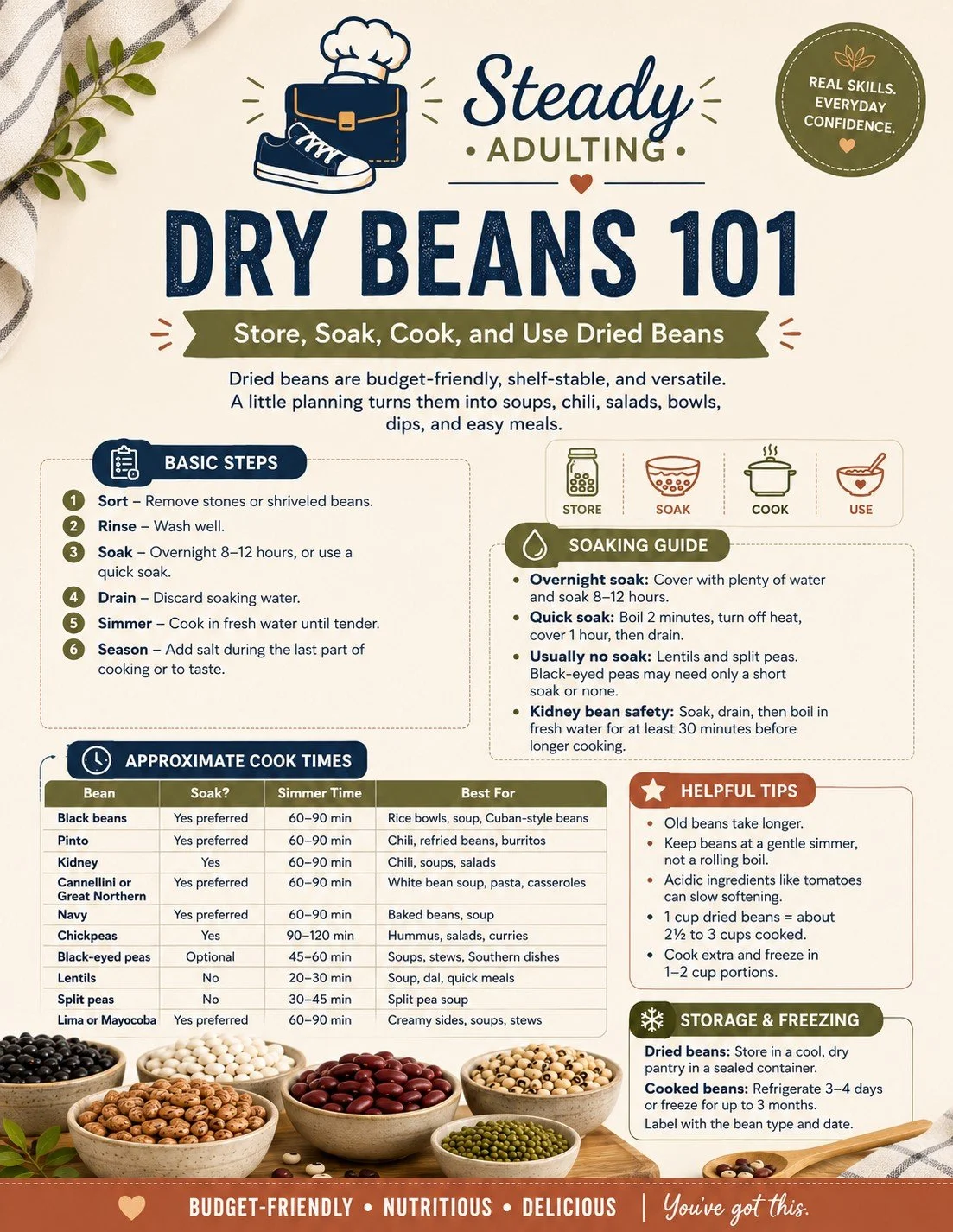
Your guide to preparing most types of dry beans commonly available in the store.
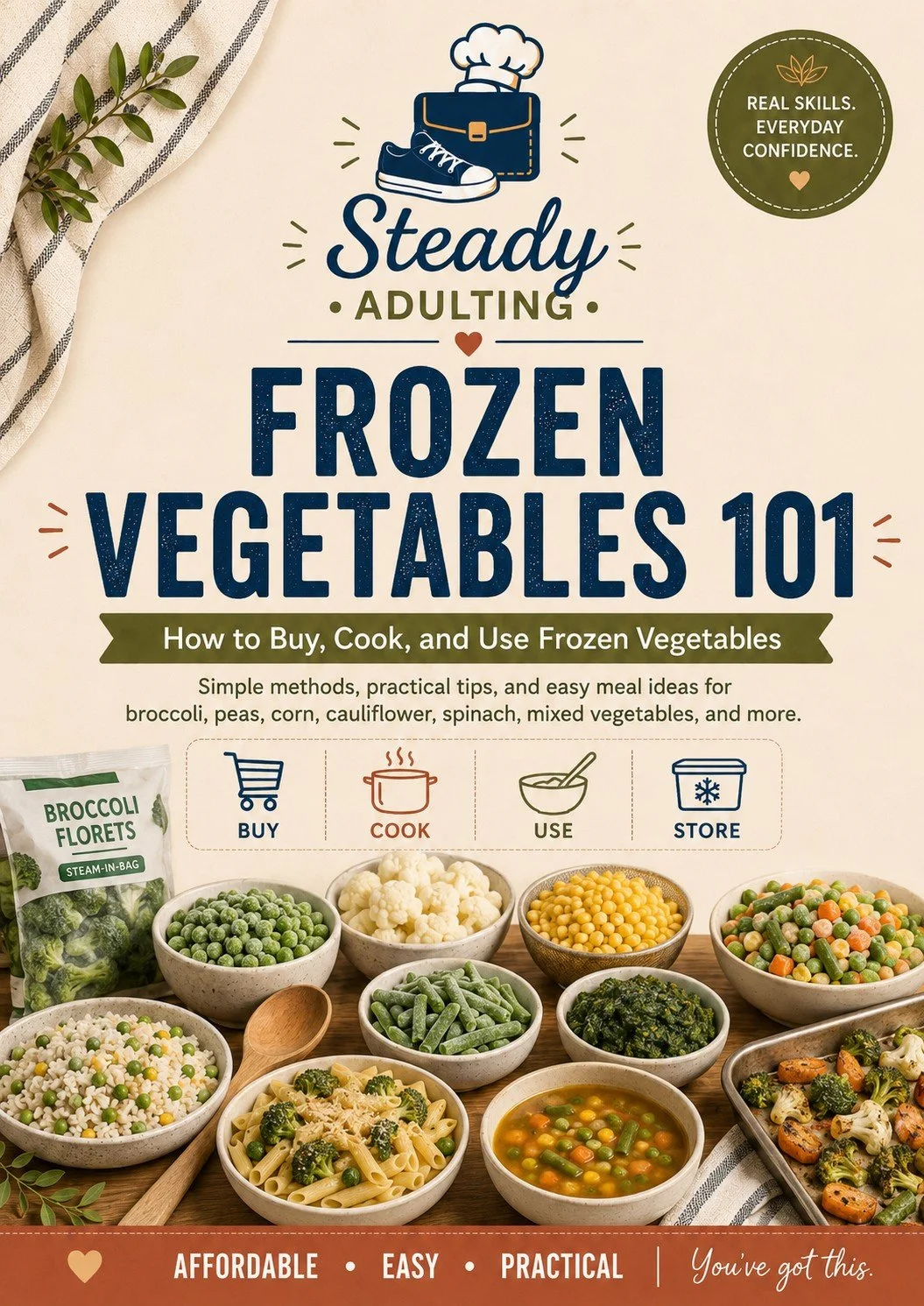
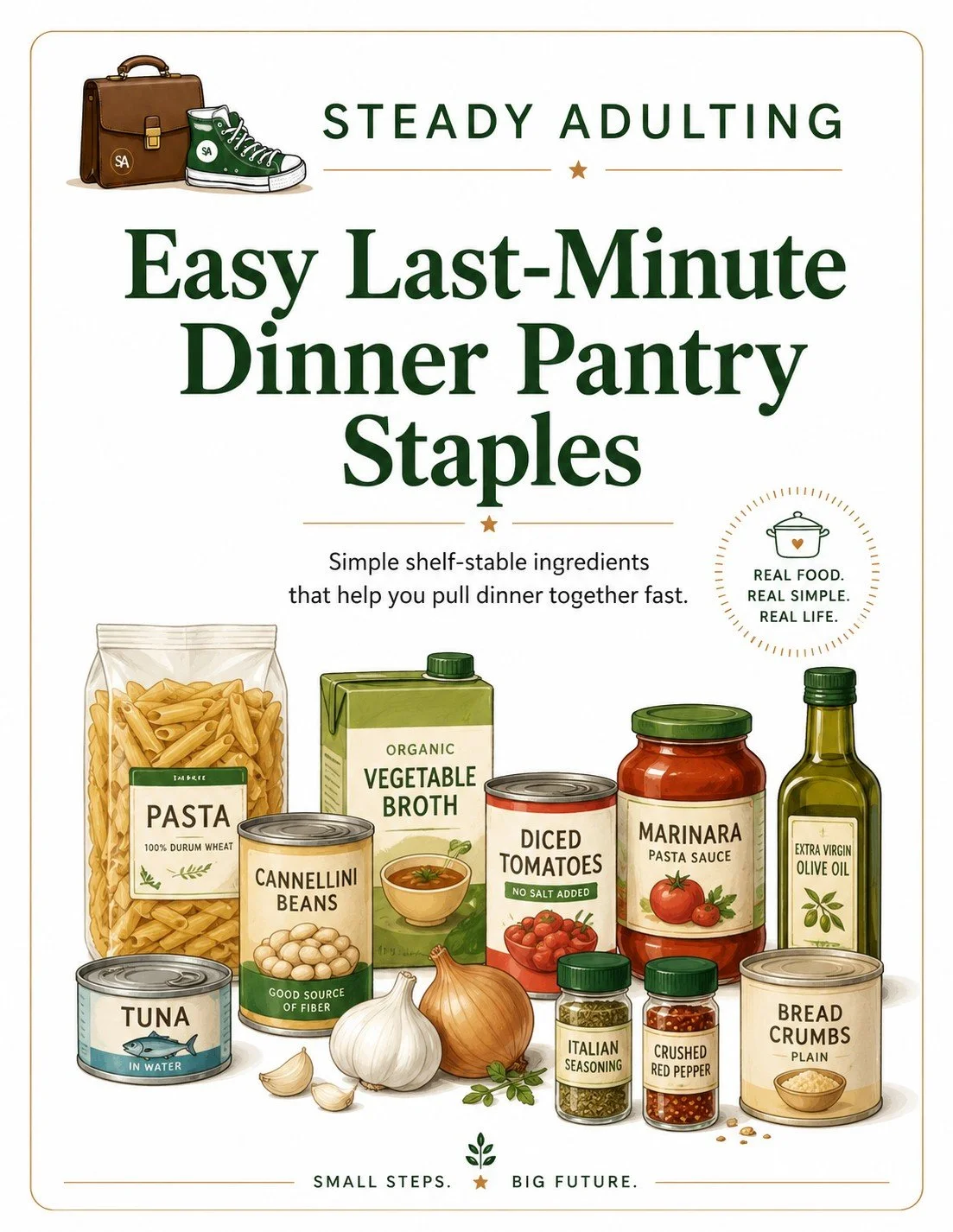
What to keep on hand so “there’s nothing to eat” doesn’t automatically mean takeout.
5. When Something Goes Wrong
It happens to the best of us… the phone buzzes, the doorbell rings, something falls. We take our attention away from cooking for a moment, and something goes wrong. Occasionally, it is just a dash of something extra that you may need.
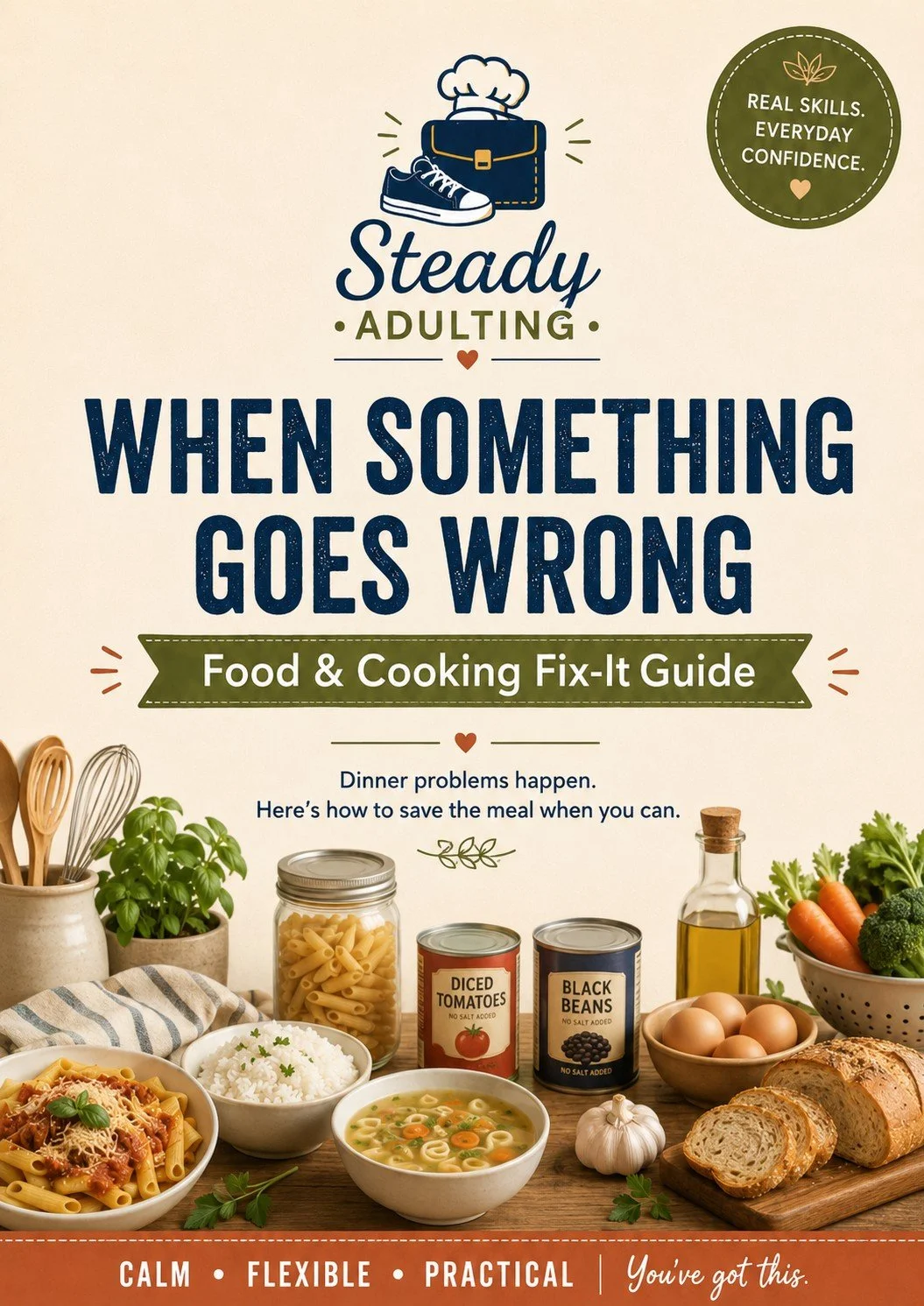
We have all had an issue in the kitchen where either we burned something, forgot to defrost, used too much of something, not enough, etc. This guide is to help you determine what to do in those cases.
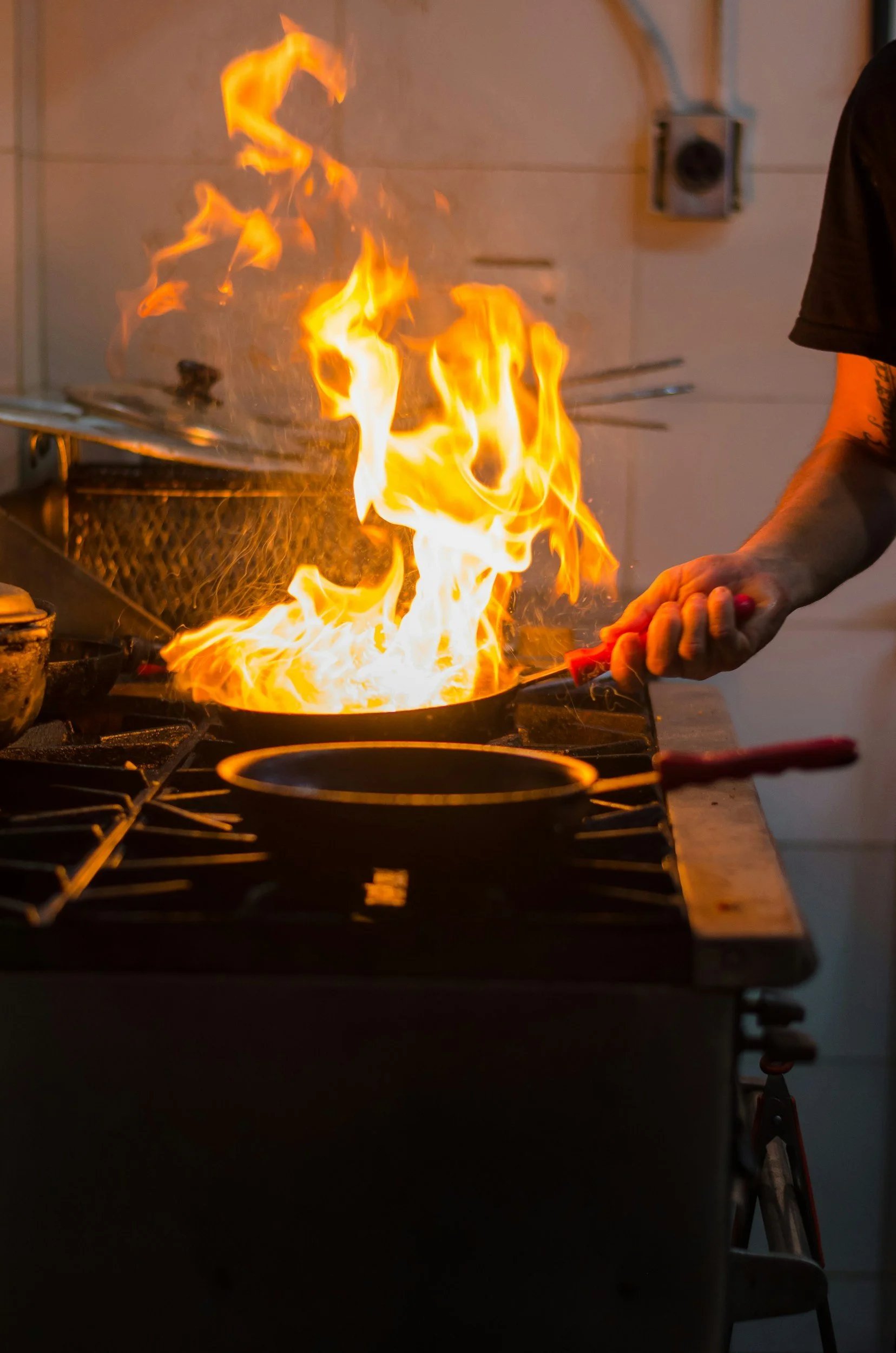
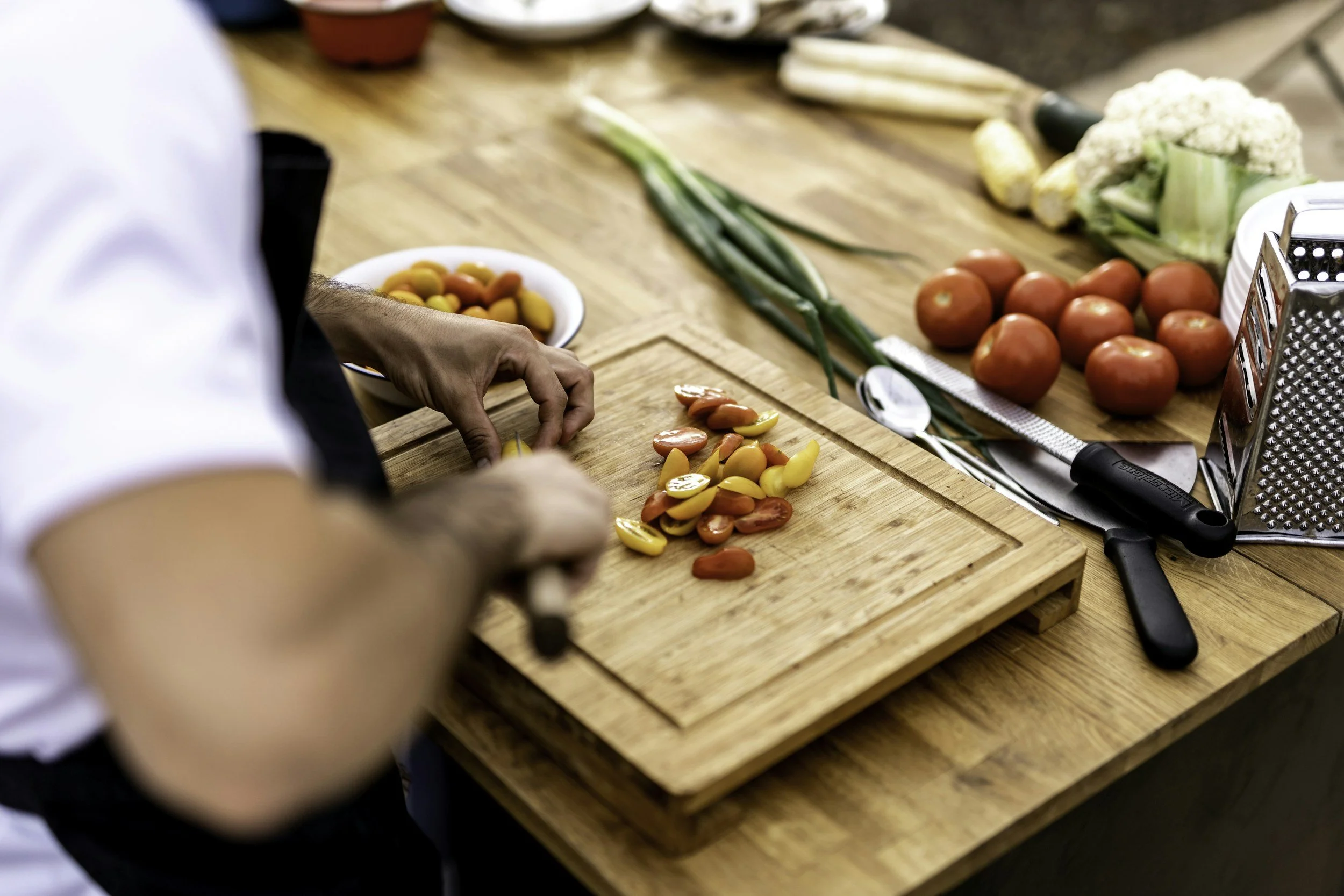
Image by: Frederick Medina
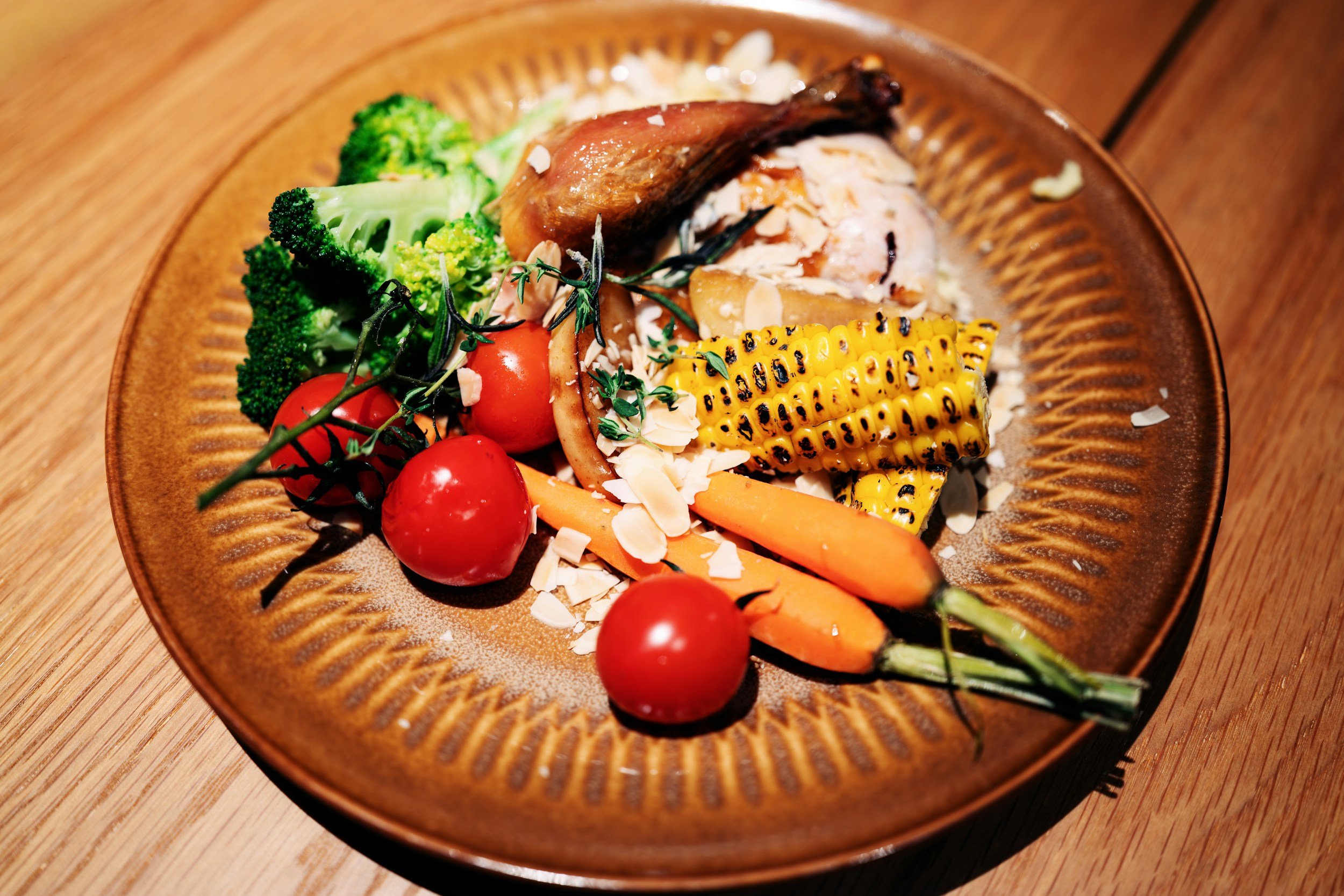
Steady Adulting Takeaway
Cooking does not have to be fancy to be responsible. A safe, filling dinner made from rice, eggs, beans, pasta, chicken, vegetables, or leftovers is still real adulting.
The goal is not perfection. The goal is to know enough to feed yourself safely, affordably, and calmly.